My research interests include inverse problems for linear, nonlinear, fully nonlinear, and nonlocal partial differential equations, as well as their connections with integral geometry and geometric analysis.
Inverse problems
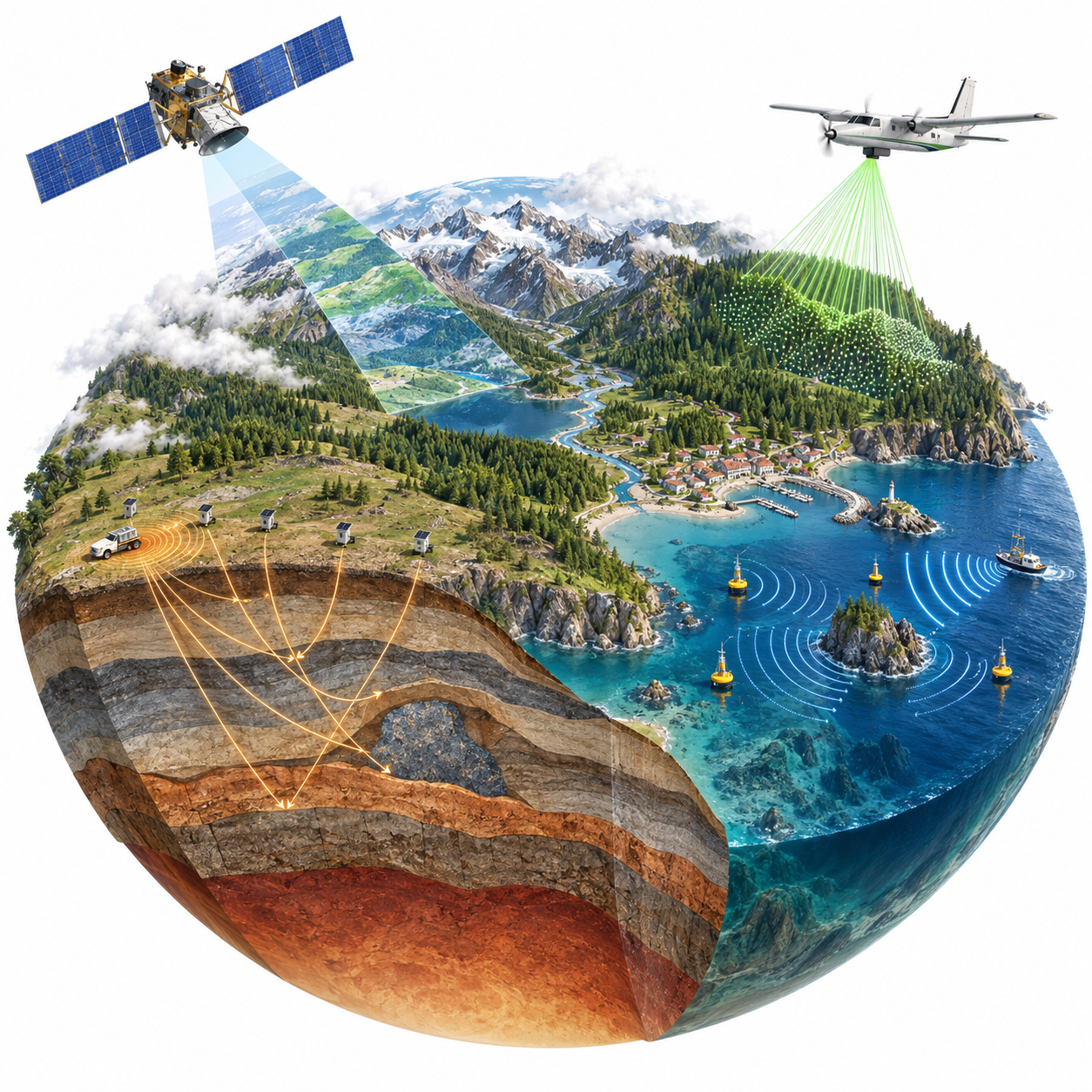
Inverse problems seek to recover hidden structures or physical properties from indirect observations. Examples include satellite remote sensing, LiDAR, seismic exploration, wave scattering, and medical imaging. The central questions concern uniqueness, stability, and reconstruction: what can the data determine, how sensitive is the answer to measurement errors, and how can the unknown information be recovered?
Nonlinear and fully nonlinear inverse problems
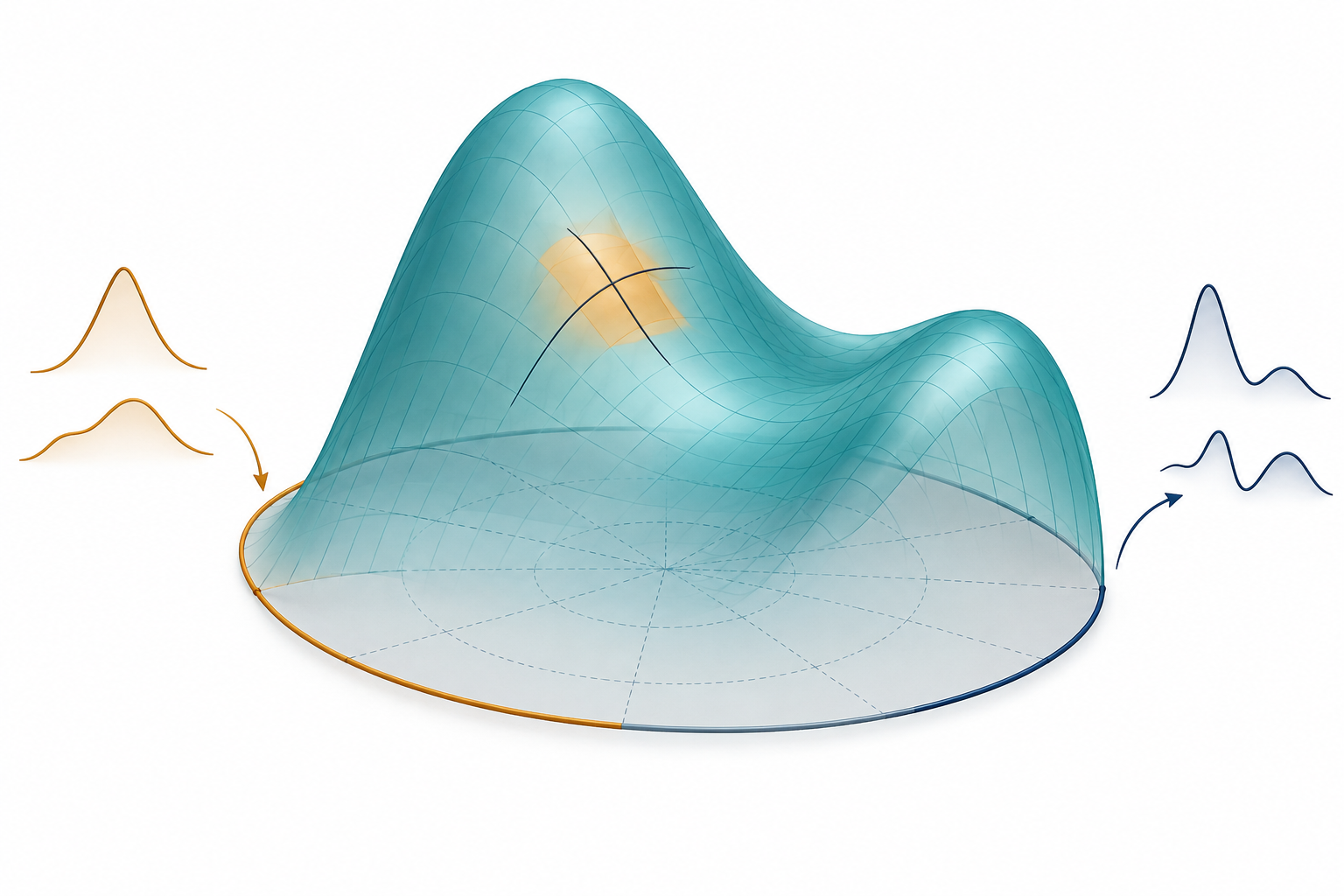
Nonlinear equations describe responses that need not be proportional to the applied input. Their inverse problems ask how measurements can identify unknown nonlinearities, coefficients, or sources.
My work ranges from semilinear equations to fully nonlinear models, including Monge–Ampère, prescribed Gaussian curvature, k-Hessian, and infinity Laplacian equations. A recurring question is how different boundary inputs can reveal information encoded in the nonlinear response.
Nonlocal inverse problems
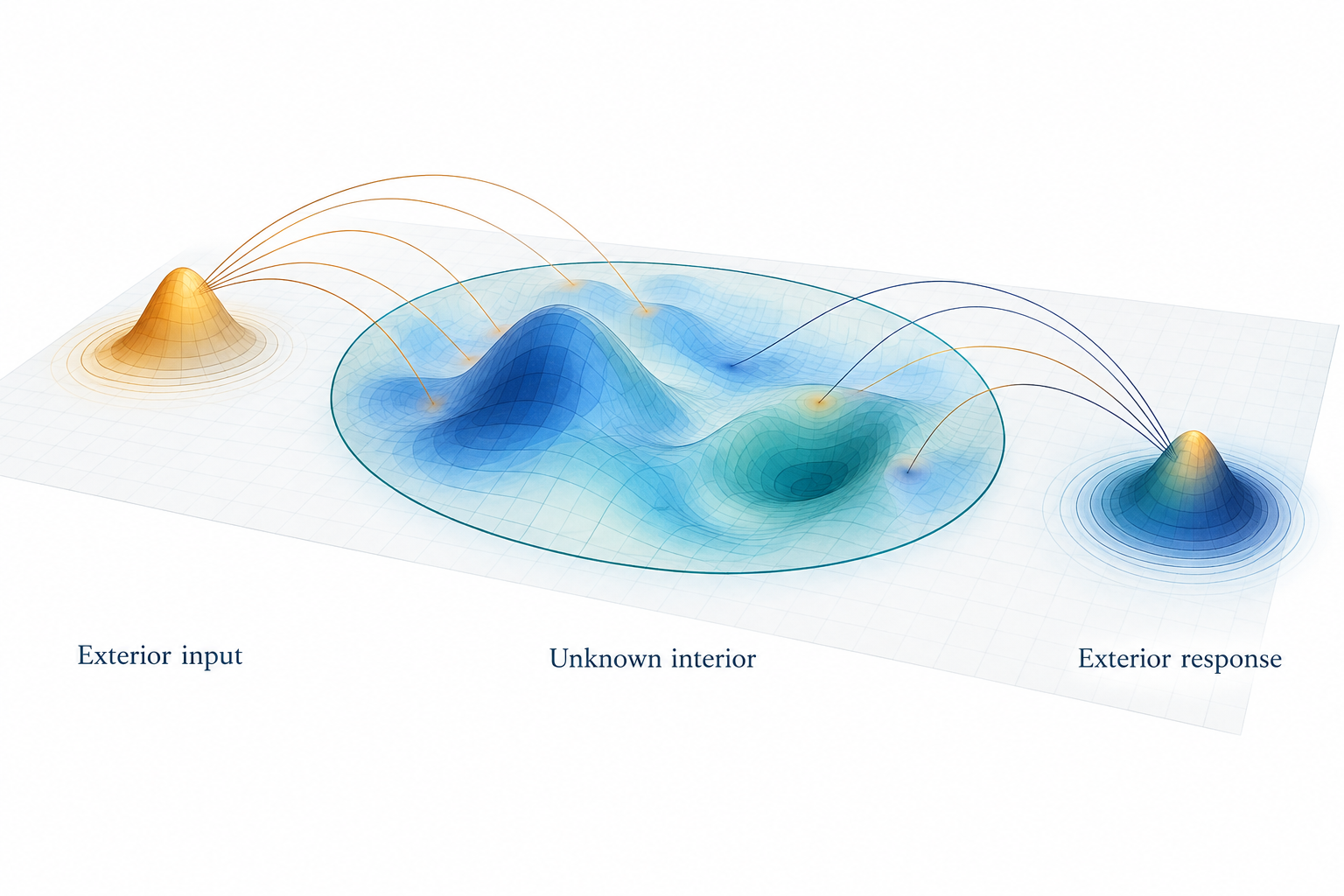
Nonlocal equations describe interactions across distances. In fractional models, inputs and measurements in an exterior region can reveal information about an inaccessible interior.
My work includes recovery of leading coefficients and sources, identification of angular kernels of stable operators, and monotonicity-based reconstruction. Stability estimates, including Lipschitz stability under suitable finite-dimensional assumptions, address how recovery is affected by measurement errors.
Geometric inverse problems
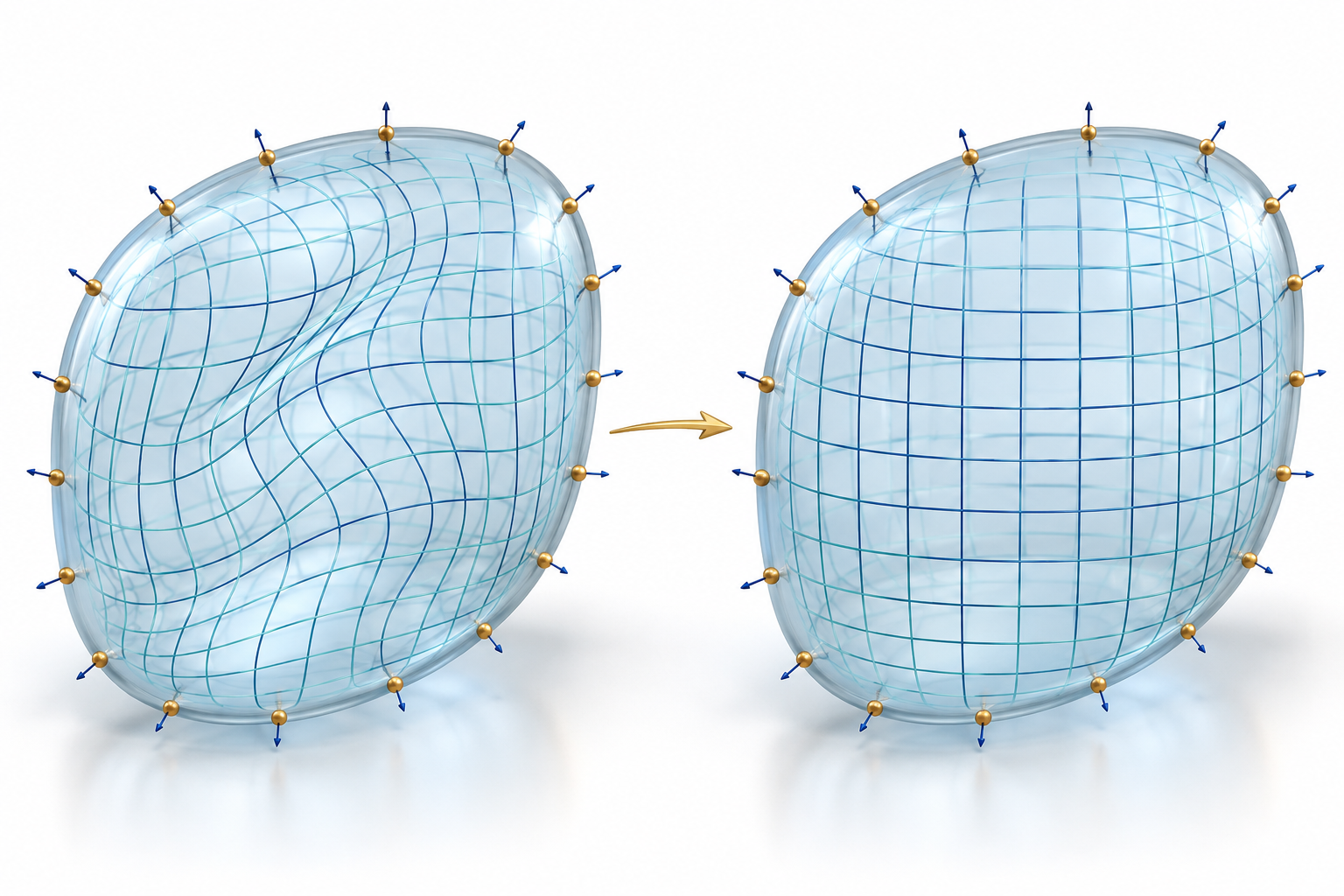
Geometric inverse problems ask whether measurements determine an unknown interior geometry. A central example is the anisotropic Calderón problem, motivated by electrical impedance tomography in media with direction-dependent conductivity.
Boundary fixing changes of coordinates leave the measurements unchanged, creating a natural ambiguity known as gauge freedom. Determining geometry up to this freedom remains a central open problem for general smooth metrics in dimensions three and higher.
Scattering, elasticity and cloaking
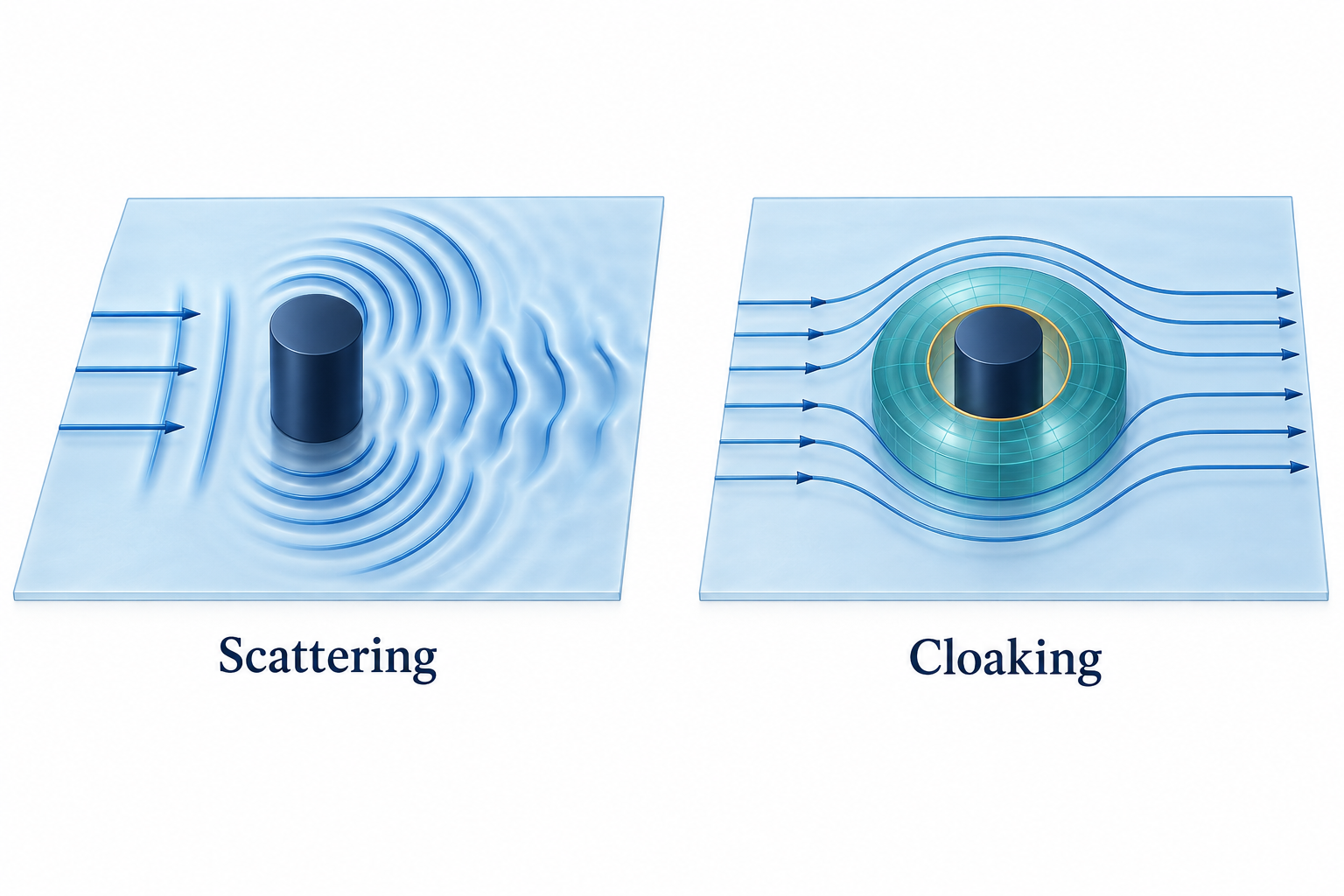
Scattering problems study how waves interact with obstacles and inhomogeneous materials. Their inverse counterparts use the observed fields to recover hidden objects, sources, or material parameters.
My interests include acoustic and electromagnetic scattering, elastic systems, and near-cloaking. Cloaking explores the complementary question: can a surrounding medium make an object undetectable, or nearly undetectable, from exterior measurements? Together these problems examine the possibilities and limits of wave-based probing.
Preprints and accepted manuscripts are listed below as PDFs. Please consult the published journal versions for the final articles. My preprints are also available on arXiv; further publication information can be found on MathSciNet and Google Scholar.